Handheld Neo-retro Game Emulator for Video Games Crafts
First Impressions of a Retro-Inspired Vector Asset
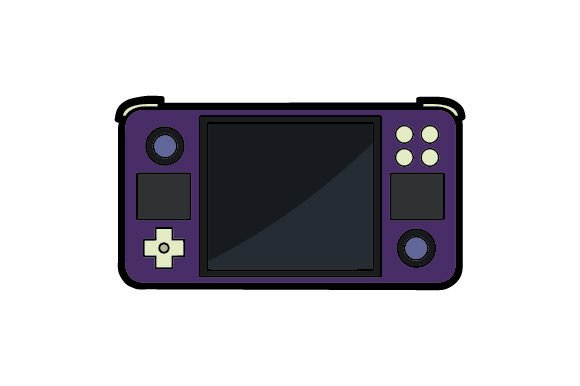
Opening the Handheld Neo-retro Game Emulator for the first time, I immediately recognized the visual tension this graphic design asset brings to a project. It is not just a nostalgic silhouette of a portable console. The design language leans into a hybrid mood: the chunky, ergonomic curves of late-90s hardware meet a softened, almost toy-like finish that feels suited for both modern design and vintage-inspired branding. As a designer who regularly selects design assets for client work, I found this illustration refreshingly specific. It is not a generic game controller. It is a deliberate nod to a particular era of handheld gaming, which gives it immediate personality and emotional pull.
This digital product arrives in versatile formats including SVG design, transparent PNG, EPS, and DXF. That range alone signals that the creator understands real-world commercial design workflows. Whether I am building a brand identity for a retro arcade bar or creating printable design assets for an Etsy product, the file structure supports both screen and print output without forcing me to rebuild from scratch. The PNG design includes transparency, which is essential when layering into social media graphics or product mockup compositions.
Where This Asset Shines in Client Work
I recently took on a project for a small business that produces handmade leather goods with a gamer aesthetic. The client wanted small business branding that felt nostalgic but not childish. The Handheld Neo-retro Game Emulator became the anchor visual for their packaging design. The clean vector lines allowed me to scale the SVG design from a tiny embossed logo on a wallet to a full-bleed hero graphic on the product box. The clip art style is detailed enough to read as a specific object, but simplified enough that it does not overwhelm a layout.
For t-shirt design and sublimation design projects, this asset performs exceptionally well. The neo-retro mood pairs naturally with bold typography and halftone textures. I tested it on a dark heather tee using the transparent PNG, and the button details and screen outline held up without losing definition. The print-on-demand market responds well to this kind of recognizable iconography, especially when the subject matter taps into 90s nostalgia. Sticker design is another obvious application. The compact shape of the console fits neatly into die-cut kiss-cut sticker sheets, and the solid vector fill makes it easy to recolor for different design bundles or themed collections.
Readability and Visual Hierarchy in Marketing Layouts
One of the first things I check when evaluating a creative design asset is how it affects visual hierarchy. The Handheld Neo-retro Game Emulator has a strong horizontal silhouette, which means it can anchor a poster or flyer layout without competing with vertical text blocks. I placed it as a supporting element in a Canva template for a gaming-themed Instagram post. The console sat at the bottom third of the frame, and the social media graphics felt balanced without needing extra decorative clutter. The asset reads clearly at medium to large sizes, but I advise caution when shrinking it below two inches in print. The D-pad and action buttons can become muddy if the resolution is not preserved, so always export the SVG file at the intended output size.
For editorial design and web design contexts, this asset works best as a breakout element or a section header icon. In a recent blog visual layout for a gaming culture site, I used the Handheld Neo-retro Game Emulator as a repeating motif across article headers. The consistent shape helped tie the series together visually. The brand identity remained cohesive because the asset did not fight with the sans-serif typeface I paired it with. It also harmonized well with a monoline handwritten font for pull quotes, creating a nice contrast between structured geometry and organic lettering.
When to Use This Asset with Care
No graphic design asset is universal, and the Handheld Neo-retro Game Emulator has limitations worth noting. In minimalist branding projects that require extreme simplicity, the detailed console shape may introduce unwanted visual noise. If the client is a law firm or a financial consultancy, this asset would feel out of place. Similarly, for professional corporate materials where visual trust and restraint are paramount, the retro gaming motif can undermine the seriousness of the message.
I also caution against using this illustration in low-contrast designs on light backgrounds without adding a subtle stroke or shadow. The console outline is relatively thin in some areas, and on a pale cream or pastel background, the buttons can disappear. I tested the PNG design on a white mockup and found that adding a 10% gray drop shadow improved legibility significantly. If you are working with sublimation design on a light-colored mug or tote bag, consider reversing the asset to a dark fill so the details remain crisp.
Practical Designer Notes Before Using Commercially
Before I commit a design asset to a client project, I run a series of checks. Here is what I recommend for the Handheld Neo-retro Game Emulator:
- Test it in black and white to evaluate contrast and form. The console shape should be recognizable without relying on color. I printed a grayscale version and the D-pad still read well.
- Check contrast on light and dark backgrounds. The SVG design holds up on dark backgrounds, but the black outline version needs a light fill to pop on black surfaces.
- Preview at small and large sizes. At 0.5 inches, the button details become speckles. Keep the minimum print size at 1 inch for clarity.
- Place it on real mockups. I tested the product mockup on a phone case, a sticker sheet, and a t-shirt. The transparent PNG layered cleanly in all three scenarios.
- Test print quality on a home inkjet and a commercial laser printer. The EPS version produced the sharpest edges on the laser printer.
- Inspect file formats. The SVG file opened cleanly in Adobe Illustrator and Affinity Designer. The DXF imported well into Cricut Design Space for a Cricut project test cut.
- Review commercial licensing. Always confirm that the commercial license covers client work, print-on-demand sales, and digital product distribution. This asset is sold as a creative marketplace item, so the terms should be clearly stated in the purchase page.
Typography Pairing and Mood Alignment
I tested the Handheld Neo-retro Game Emulator with several font styles to see which typefaces support the visual mood best. A bold sans serif font like Montserrat or Bebas Neue creates a strong modern design contrast with the retro shape. A display font with pixel or arcade influences reinforces the theme, but can feel cliché if overused. For a more refined brand identity, I used a clean serif font for body copy and reserved the pixel font for the headline. The console asset itself acts as the nostalgic anchor, so the typography does not need to do all the heavy lifting.
For packaging design projects aimed at a handmade business audience, I paired the asset with a handwritten font for product names and a sans serif font for ingredients or details. The combination felt approachable but intentional. The Handheld Neo-retro Game Emulator does not demand a specific typeface, which gives it flexibility across different marketing visuals.
Creative Applications for Print and Digital
Beyond standard logo design and packaging, this printable design asset works well in invitations for gaming-themed parties or events. I used it as a decorative border element on a poster for a local esports tournament, and the client appreciated that it did not look like a generic stock icon. The clip art quality is polished enough for commercial design but retains a handcrafted feel that suits small business branding.
For digital ads and Pinterest pins, the asset scales well within Canva templates. I created a series of social media graphics promoting a print-on-demand store, and the Handheld Neo-retro Game Emulator became the recurring visual hook. The transparent PNG made it easy to overlay on gradient backgrounds and photo textures. The asset also works as a sublimation design for ceramic mugs and coasters, provided the contrast is adjusted for the substrate.
Final Verdict for Designers and Small Business Owners
The Handheld Neo-retro Game Emulator is a well-executed graphic design asset that fills a specific niche in the creative marketplace. It is not a one-size-fits-all solution, but for projects that need a clear, nostalgic, and editable visual tied to Video Games and Crafts, it delivers. The multiple file formats reduce friction in production workflows, and the vector quality supports both brand identity and merchandise applications. I would recommend it for Etsy product listings, sticker design, t-shirt design, packaging design, and social media graphics aimed at a gaming or retro audience. Just remember to test the commercial license, preview at small sizes, and adjust contrast for light backgrounds. With those checks in place, this digital product can become a reliable tool in your design assets library.